

Speakers
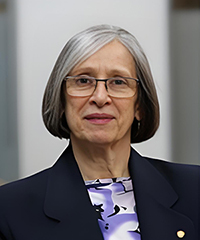
Ljiljana Trajkovic
Professor, Simon Fraser University, Canada.
Research field: Communication networks; Dynamical Systems.
Ljiljana Trajkovic received the Dipl. Ing. degree from University of Pristina, Yugoslavia, the M.Sc. degrees in electrical engineering and computer engineering from Syracuse University, Syracuse, NY, and the Ph.D. degree in electrical engineering from University of California at Los Angeles. She is currently a professor in the School of Engineering Science, Simon Fraser University, Burnaby, British Columbia, Canada. Her research interests include communication networks and dynamical systems. Dr. Trajkovic served as IEEE Division X Delegate/Director, President of the IEEE Systems, Man, and Cybernetics Society, and President of the IEEE Circuits and Systems Society. She serves as Editor-in-Chief of the IEEE Transactions on Human-Machine Systems. She is a Distinguished Lecturer of the IEEE Systems, Man, and Cybernetics Society and was a Distinguished Lecturer of the IEEE Circuits and System Society. She is a Fellow of the IEEE.

Pascal Lorenz
Professor, University of Haute-Alsace, France.
Research field: QoS; Wireless Networks and High-speed Networks.
Pascal Lorenz (lorenz@ieee.org) received his M.Sc. (1990) and Ph.D. (1994) from the University of Nancy, France. Between 1990 and 1995 he was a research engineer at WorldFIP Europe and at Alcatel-Alsthom. He is a professor at the University of Haute-Alsace, France, since 1995. His research interests include QoS, wireless networks and high-speed networks. He is the author/co-author of 3 books, 3 patents and 200 international publications in refereed journals and conferences. He was Technical Editor of the IEEE Communications Magazine Editorial Board (2000-2006), IEEE Networks Magazine since 2015, IEEE Transactions on Vehicular Technology since 2017, Chair of IEEE ComSoc France (2014-2020), Financial chair of IEEE France (2017-2022), Chair of Vertical Issues in Communication Systems Technical Committee Cluster (2008-2009), Chair of the Communications Systems Integration and Modeling Technical Committee (2003-2009), Chair of the Communications Software Technical Committee (2008-2010) and Chair of the Technical Committee on Information Infrastructure and Networking (2016-2017), Chair of IEEE/ComSoc Satellite and Space Communications Technical (2022-2023), IEEE R8 Finance Committee (2022-2023), IEEE R8 Conference Coordination Committee (2023). He has served as Co-Program Chair of IEEE WCNC'2012 and ICC'2004, Executive Vice-Chair of ICC'2017, TPC Vice Chair of Globecom'2018, Panel sessions co-chair for Globecom'16, tutorial chair of VTC'2013 Spring and WCNC'2010, track chair of PIMRC'2012 and WCNC'2014, symposium Co-Chair at Globecom 2007-2011, Globecom'2019, ICC 2008-2010, ICC'2014 and '2016. He has served as Co-Guest Editor for special issues of IEEE Communications Magazine, Networks Magazine, Wireless Communications Magazine, Telecommunications Systems and LNCS. He is associate Editor for International Journal of Communication Systems (IJCS-Wiley), Journal on Security and Communication Networks (SCN-Wiley) and International Journal of Business Data Communications and Networking, Journal of Network and Computer Applications (JNCA-Elsevier). He is senior member of the IEEE, IARIA fellow and member of many international program committees. He has organized many conferences, chaired several technical sessions and gave tutorials at major international conferences. He was IEEE ComSoc Distinguished Lecturer Tour during 2013-2014.

Neil Gordon
Professor, University of Hull, UK.
Research field: Finite Geometry and Applications; HCI, Gamification and Computer-based Instruction; Computer Algebra; Safety and Reliability Analysis; Telehealth; Technology Enhanced Learning and Information Systems.
Neil is a Professor in Computer Science, a National Teaching Fellow, and a Principal Fellow of AdvanceHE. He has produced a number of reports for AdvanceHE, in particular on how technology enhanced learning can enable flexible pedagogy, on the role of assessment in education, and on ways to address issues in retention and attainment in computing education. His research interests include applications of computer science to enable true technology enhanced learning, issues around sustainable development, as well as more discipline specific work on applications of computer algebra and formal methods.

Vladan Devedzic
Professor, University of Belgrade, Serbia.
Research field: Artificial Intelligence; Programming Education; Software Engineering; Intelligent Software Systems; Technology-Enhanced Learning (TEL).
Vladan Devedzic is a Professor of Computer Science and Software Engineering at the University of Belgrade, Faculty of Organizational Sciences, Belgrade, Serbia. He also used to teach several Computer Science and software Engineering courses at other universities, including University of Canterbury, New Zealand. Since 2021, he is a Corresponding Member of the Serbian Academy of Sciences and Arts (SASA). He is the founder and the chair of the GOOD OLD AI research network. He is also the founder of the Artificial Intelligence Laboratory at his home faculty. Vladan Devedzic has authored/co-authored more than 380 research papers, published in international and national journals or presented at international and national conferences, as well as six books on intelligent systems and software engineering. So far, he has given more than 20 Keynote and Plenary talks at international conferences, as well as more than 20 tutorials. His long-term professional objective is to bring close together ideas from the broad fields of Artificial Intelligence/ Intelligent Systems and Software Engineering.
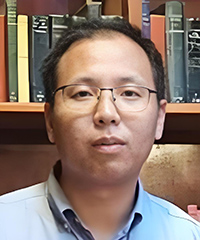
Xiangjie Kong
Professor, Zhejiang University of Technology, China.
Research field: Big Data; Network Science and Computational Social Science.
Dr. Xiangjie Kong is currently a Full Professor in the College of Computer Science & Technology, Zhejiang University of Technology (ZJUT), China. Previously, he was an Associate Professor in School of Software, Dalian University of Technology (DUT), China, where he was the Head of the Department of Cyber Engineering. He is the Founding Director of City Science of Social Computing Lab (The CSSC Lab). He is/was on the Editorial Boards of 6 International journals. He has served as the General Co-Chair, Workshop Chair, Publicity Chair or Program Committee Member of over 30 conferences. Dr. Kong has authored/co-authored over 140 scientific papers in international journals and conferences. His research has been reported by Nature Index and other medias. He has been invited as Reviewers for numerous prestigious journals. Dr. Kong has authored/co-authored three books (in Chinese). He has contributed to the development of 14 copyrighted software systems and 20 filed patents. He is named in the2019 and 2020 world's top 2% of Scientists List published by Stanford University. Dr. Kong received IEEE Vehicular Technology Society 2020 Best Land Transportation Paper Award, and The Natural Science Fund of Zhejiang Province for Distinguished Young Scholars. He has been invited as Keynote Speaker at 2 international conferences, and delivered a number of Invited Talks at international conferences and many universities worldwide. His research interests include big data, network science, and computational social science. He is a Distinguished Member of CCF, a Senior Member of IEEE, a Full Member of Sigma Xi, and a Member of ACM.
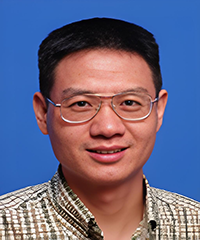
Xinguo Yu
Professor, Central China Normal University, China.
Research field: Intelligent Educational Technology; Educational Robotics; Multimedia Analysis; Computer Vision; Machine Learning.
Xinguo Yu is the dean of CCNU Wollongong Joint Institute and a professor of National Engineering Research Center for E-Learning at Central China Normal University, Wuhan, China. He is a senior member of both IEEE and ACM, and an adjunct professor of University of Wollongong, Australia. He is a vice director of Smart Educational Technology Branch Society under Automation Society in China, and the chair of Hubei Society of Artificial Intelligence in Research and Education. He received B.Sc. degree in Mathematics from Wuhan University of Technology, M. Eng degree from Huazhong University of Science and Technology, another M. Eng. degree from Nanyang Technological University, Singapore and Ph.D. degree in Computer Science from National University of Singapore. His current research mainly focuses on intelligent educational technology, educational robotics, multimedia analysis, computer vision, and machine learning. He has published over 170 research papers. He is Associate Editor and Guest Editors for several international journals. He was general chairs or program chairs or Keynote speakers for more than 30 international conferences. He is the main founder of annual International Conference on Artificial Intelligence in Education and Research.
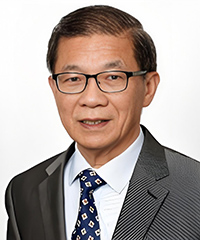
Vincent CS Lee
Associate Professor, Monash University, Australia.
Research field: Signal and Information Processing; Adaptive Knowledge Representation and Information Engineering; Educational Data Mining; Decision Theory; Information System Research based on Design Science Paradigm.
Vincent CS Lee is currently an Associate Professor (top Level D professorial) with the Department of Data Science and Artificial Intelligence, Faculty of IT, Monash University in Melbourne. He is an elected Fellow of The Institute of Engineers, Australia (FIEAust), a Senior Member of IEEE (USA). His education qualifications include PhD degree from The University of Newcastle, NSW in Australia, Bachelor and Master degrees in EEE, both from the National University of Singapore; MBA from Henley Management College in Oxford, Brunel University, England; BBus (Hons 1st class in Economics & Finance) and MBus (Accountancy), both from RMIT University in Melbourne. He is an active researcher and educator (with Graduate Certificate in Higher Education Teaching from Monash University) with 30 years as academicians for four universities including Monash University and Swinburne University, both in Melbourne, joint Monash-South East University in Suzhou, Nanyang Technological University in Singapore. He was visiting Professors with School of Economics and Management, and School of Computing and Technology, Tsinghua University in Beijing. Lee's research and higher education teaching (developed and delivered undergraduate and postgraduate courses) span multi-disciplinary domains across IT, Digital Health, Signal and Information Processing, Financial Engineering (FinTech), Educational Data Mining (with learner-centric education technology tools), Explainable AI, Deep ML, Computer Vision for dynamic objects tracking, and Multiagent Autonomous Systems. Lee has published 200+ papers in IEEE Transactions on Knowledge and Data Engineering, IEEE Transactions on Signal Processing, IEEE Selected Areas in Communications, European Journal of Operational Research, Expert Systems with Applications, Neurocomputing, Journal of Educational Computing Research; and in CORE A/A* Peer-review International Conferences proceedings (AAAI, IJCAI, ICDM, ICWS, ICDE, PAKDD, CIKM, WWW, IEEE IC Signal Processing, IC-EDM). Lee also served as invited keynote speakers for a number of these IEEE and ACM Flagship conferences' and General Chair, Co-chair of steering committees ICET23, Xi'an, and Co-chair technical programs for IC MET2023, Macau. He is an Associate Editor for Journal of Intelligent Manufacturing (Springer, SCImago Journal Rank Best Quartile Q1).
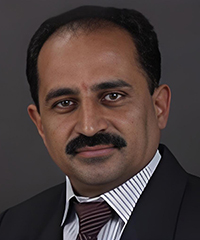
Shashikant Patil
Professor, Atlas SkillTech University, India.
Research field: Engineering Education; Continuing Education; Educational Robots; Firewalls (Computing); Computer Networks; IP; Broadband Communication; Wireless LAN; Wireless Sensor Networks.
Dr. Shashikant Patil is working as a Full Professor in UGDX/ISME at ATLAS SkillTech University, Mumbai. He is a Senior Member of ACM & IEEE, Fellow Member of the Institution of Engineers India (FIE), IETE India (FIETE), IBE India (FIBE), and ISDS Japan (FISDS). With 25 years of varied experience in research, training, and teaching, he received the "Best Researcher Award 2014" from SVKM's NMIMS Shirpur. His research interests include Signal Processing and Imaging, with over 80 publications in conferences and journals. He is an IEEE Designated Reviewer, TPC Member for over 450 international conferences like ICASSP, MMSP, ICME, and ICIP, and a potential peer reviewer for Elsevier, Springer, Wiley, IEEE, InderScience, Taylor & Francis, and Hindawi journals. He has served as Editor-in-Chief for the IEEE C-RFID Newsletter, Editorial Board Member of IEEE SDN, Managing Editor of the IEEE SDN Newsletter, and IEEE RFID Steering Committee Member. He has won awards for Best LinkedIn Profile and Best Paper. In the past, he was a member of the IEEE RFID Council, Vice President (Membership Services), IEEE Panel of Editors for Newsletters and Journals member, and has served as an SIG Member of IoT. Presently, he is an Associate Editor and Editorial Member for IET and other reputed SCI Journals. Additionally, he was an Executive Member and IEEE ComSoC Chapter Chair of the IEEE Bombay Section.
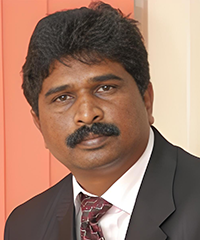
Boddu Raja Sarath Kumar
Professor, Raghu Engineering College, India.
Research field: Machine Learning; Big Data.
Prof. Raja Sarath Kumar Boddu is working as a professor at the Faculty of Computer Science and Engineering, Raghu Engineering College, Visakhapatnam, India, with 25 years of experience in Engineering Education. Dr. Boddu has travelled to several countries on research, and as part of that, He has been invited to the Engineering Leaders Conference on Engineering Education, which was held in Doha, organised by Texas A&M University. Dr. Boddu has authored five books, twenty-three book chapters and invented seven patents on Computer Science and published Ninety-two Research papers so far. Dr. Boddu is a Fellow of IEI(India), a Senior Member of IEEE and ACM, and a Life Member of IETE, ISCA, and CSI. So far, Dr. Boddu has reviewed over a hundred research papers and is still a reviewer for IEEE, Springer, Hindawi and Scopus journals.

Fahriye Altinay
Professor, Near East University, Turkey.
Research field: Open Education; Distance Education; Educational Management; Educational Technology; Smart Learning, Disability; School Experience; Instructional Technologies.
Prof. Fahriye Altınay graduated from the Faculty of Communication. She completed her master's degree in educational sciences in the field of educational technology, distance education. She completed her master's thesis as the subject of "communication barriers in distance education". She graduated from the Near East University, PhD program in Educational Administration. The subject of the doctoral thesis is the adaptation of learning organizations and distance education institutions. Later, she completed her doctorate program in Educational Technology at Middlesex University. In her doctoral thesis, she worked on how student and teacher participation can be realized in the learning and teaching process with a focus on interaction in distance education. In the field of educational technologies, especially in the field of distance education, since 2002, it has been sharing scientific studies with the academic world and conducting academic studies within the framework of international cooperation on current issues in this field. Over the last 10 years she have produced a significant quantity of high-quality research publications and contributed to many international scholarly activities and also active social projects in society with people with disabilities and emerging technologies. AI, Metaverse, VR and etc are used in all aspects of education and societal needs as an experience to solve issues in quality education and decreasing inequalities. She works full-time at the Near East University and serves as the Vice Director of the Graduate Studies Institute and the Co-Chair of the Social Research and Development Center. It carries out social projects and scientific studies on disability, women and children.
Latest News
Supported By